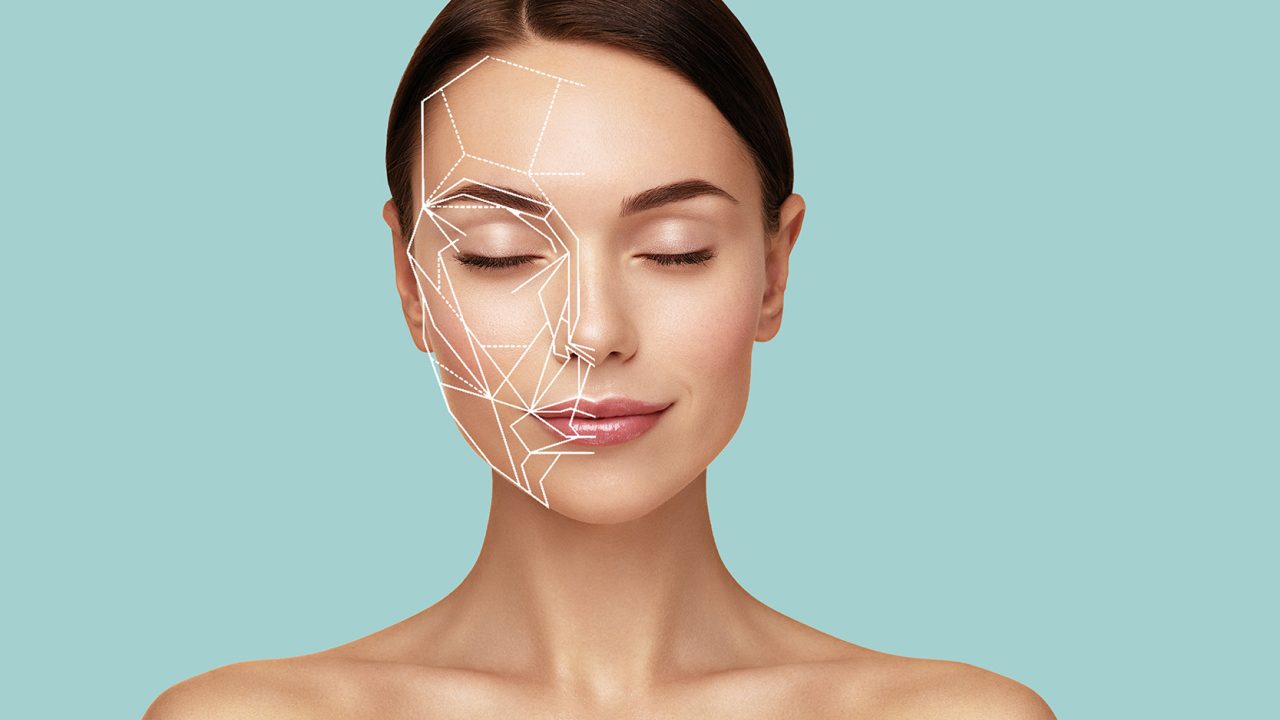
There’s a reason some faces feel naturally “right” to us. Beauty, especially in women’s faces, is often explained by balance—how features relate to one another, not whether each feature is perfect in isolation. The Golden Ratio (approximately 1.618) has become a popular shorthand for harmony in art, architecture, and yes, facial aesthetics. But here’s the truth: while the Golden Ratio can be a helpful guide, real-world beauty is more complex, more individual, and more attainable than a single number.
At Boise Image Enhancement Centre, our focus is facial balance—restoring youthful proportions and enhancing what you already have so you look like yourself on your best day, at every age. That means blending scientific principles, anatomic precision, and advanced treatments to create results that are elegant, natural, and unmistakably you.
Below, we explain the science of facial harmony, how aging subtly shifts your facial ratios, and what women can do in each decade to maintain a balanced, youthful look. Beauty has a blueprint—your blueprint—and with the right plan, it’s achievable at any age.
The science behind facial balance (and what the Golden Ratio gets right)
Research shows that people generally perceive faces as more attractive when they are balanced, symmetrical, and consistent with feminine cues—yet not identical to a rigid template. Symmetry and “averageness” are universally attractive cues, while femininity (e.g., a softly tapered jawline, defined cheekbones, and proportionate lips) is especially important for women’s facial attractiveness across cultures.
So where does the Golden Ratio fit? Some studies suggest that certain facial measurements judged most attractive in women approximate Golden Ratio values. One influential study found that faces were rated as most attractive when the vertical distance between the eyes and mouth was about 36% of the face’s length and when the horizontal distance was about 46% of face width—numbers that echo Golden Ratio relationships. That said, not every beautiful face conforms to “phi.” Genetics, ethnicity, age, and personal style all influence what looks balanced on you.
Bottom line: The Golden Ratio is a useful compass, not a destination. Modern aesthetics focuses on harmony, proportion, and the emotional impression your face conveys—calm, approachable, rested—rather than chasing a single mathematical ideal.
Understanding facial proportions: thirds, fifths, and the “Ogee curve”
Experts often analyze the face using classic proportions:
- Vertical thirds: The face is divided into upper (hairline to brow), middle (brow to base of nose), and lower (base of nose to chin) thirds. In youth, these thirds appear relatively balanced.
- Horizontal fifths: A proportionally balanced face fits roughly five equal-width segments across its width (ear to ear), using the eyes and nose as internal landmarks.
- Lip balance: A slightly fuller lower lip, with an upper-to-lower lip height near 1:1.3–1.6, is often perceived as youthful and feminine.
- The Ogee curve: The soft S-shaped contour from the temple through the cheek to the midface that conveys lift and vitality.
These are guides that help us plan enhancements. They are not rules, and they must be adapted to your unique features, bone structure, ethnicity, and aesthetic goals.
How aging disrupts facial ratios
Aging is not just about wrinkles—it’s about how your underlying structures transform. Over time, facial bones remodel (especially around the eye sockets and midface), fat pads deflate and descend, ligaments loosen, and skin thins with declining collagen and elastin. These shifts subtly change the “math” of your face:
- Brow/upper face: Loss of lateral brow support can flatten the tail of the brow and make eyes look tired.
- Midface: Cheek volume decreases and the Ogee curve softens, lengthening the midface and drawing attention to the nasolabial area.
- Lower face: The lower third often elongates as the chin pad descends, jowls form with ligament laxity, and the jawline loses definition. Submental fullness (under-chin) can further decrease the lower-face-to-neck contour ratio.
- Skin quality: Collagen declines about 1% per year in early adulthood and drops more rapidly around menopause, which accelerates fine lines, laxity, and crepiness.
When these changes accumulate, the face can appear heavier in the lower third, less lifted in the midface, and less defined overall. The goal of modern medical aesthetics is to rebalance—subtly restoring volume, structure, and lift to bring back the youthful relationships between features.
Phi in practice: how we use ratios to plan natural results
In expert hands, the Golden Ratio and other proportion guides inform where to add support and where to subtract or tighten. For example:
- Midface support first: Restoring the cheek’s deep support often reduces shadowing around the mouth and nose without over-filling lines directly—recreating a youthful Ogee curve.
- Soften the “pull” of expression lines: Strategic wrinkle relaxers can rebalance the face by reducing overactive muscle pull that drags brows or corners of the mouth downward, conveying calm and openness.
- Define edges and transitions: A crisp jawline, balanced chin projection, and a smooth lid-cheek junction all contribute to harmonious facial thirds.
- Skin equals structure: Even perfect contouring under dull, sun-damaged skin won’t read as youthful. Collagen-building treatments, lasers, and medical-grade skincare are non-negotiable.
Our nationally recognized injector team—considered among the safest and most skilled on the West Coast—uses these principles to design Boise Image Enhancement Centre Signature Looks that refine your own architecture rather than changing your identity.
Your decade-by-decade plan for facial balance
20s: Build habits and prevent imbalance
- Goal: Preserve collagen, prevent etched lines, and subtly refine proportions if needed (e.g., lip shape, jawline definition).
- Smart treatments:
- Light wrinkle relaxers for frown or forehead lines if you see creasing.
- Subtle lip fillers for shape and hydration, not size.
- Microneedling or Skinfinity RF for early collagen support and texture.
- Laser hair removal for long-term convenience and skin smoothness.
- Home care: Daily broad-spectrum SPF 30–50, vitamin C serum in the morning, and a gentle retinoid at night. These have the strongest evidence for preserving youthful skin.
30s: Support midface, defend collagen
- Goal: Maintain the Ogee curve, prevent lower-face heaviness, and keep skin luminous.
- Smart treatments:
- Cheek/midface hyaluronic acid fillers for subtle lift and light reflection.
- Early jawline refinement if your lower third is starting to feel soft.
- Wrinkle relaxers for dynamic lines and brow shaping.
- RF microneedling or fractional resurfacing for pores, texture, and fine lines.
- Home care: Sunscreen, vitamin C, niacinamide for pigment control, and a prescription-strength retinoid if tolerated.
40s: Rebalance structure and skin quality
- Goal: Recenter proportions by restoring midface support and refining the jawline; treat skin laxity and pigmentation.
- Smart treatments:
- Layered dermal fillers to rebuild deep support (cheeks, chin, piriform) before treating folds/deeper lines.
- Ultherapy (focused ultrasound) for non-surgical lift of the brow, lower face/jawline, and neck, where appropriate.
- PDO thread lift for mild jowls and to refine the lower third in select candidates.
- Skin resurfacing (fractional laser) to stimulate collagen and improve fine lines and tone.
- Home care: Continue SPF, vitamin C, retinoids; add peptides and growth-factor-based serums if desired to support barrier and texture.
50s and beyond: Restore harmony, lift, and luminosity
- Goal: Re-establish balanced thirds, improve jaw-neck definition, and optimize skin thickness and radiance.
- Smart treatments:
- Advanced filler strategies to address bone remodeling (temples, midface, chin) and soften the lid-cheek junction.
- Kybella or CoolSculpting for submental fullness if needed to sharpen the profile.
- Ultherapy or PDO threads for structural lift without surgery; combination approaches are common.
- Comprehensive resurfacing and collagen rejuvenating treatments to improve crepiness and texture on face, neck, and hands.
- Home care: Consistent sunscreen, retinoids, barrier-repair moisturizers, and targeted pigmentation treatments to maintain results.
The treatment toolkit that supports youthful ratios
- Wrinkle Relaxers (e.g., Botox, Xeomin): Calm overactive muscles that pull brows down or create etched lines, restoring a lifted, relaxed expression. Strategically placed neuromodulators can subtly improve upper-to-middle face balance.
- Dermal Fillers and Lip Fillers: Hyaluronic acid fillers re-create deep support in the cheek, chin, and jawline, refine the nose-to-mouth and mouth-to-chin transitions, and hydrate lips while preserving natural proportions.
- Kybella (deoxycholic acid): Targets submental fat to improve the neck-to-chin angle and sharpen the lower third—critical for balanced facial ratios.
- PDO Thread Nonsurgical Lift: Provides immediate contouring with gradual collagen stimulation for mild to moderate laxity along the jawline and midface.
- Ultherapy: Uses focused ultrasound to lift and tighten brow, lower face, under the chin, and neck tissues—enhancing vertical proportions without downtime.
- Skin Resurfacing and Skinfinity RF: Rebuilds collagen, smooths fine lines, and improves texture and tone so skin quality matches your structural improvements.
- Microneedling: Induces collagen for firmness and texture, and can be combined with topical treatments for pigment and radiance.
- Lights & Lasers: Target redness, sunspots, and mottled pigmentation for an even, youthful canvas.
- Medical-Grade Skincare: Prescription-strength retinoids, antioxidants, and professional SPFs anchor your results between visits.
Common myths about the Golden Ratio and “perfect faces”
- Myth: There’s one perfect ratio for every woman. Reality: Attractive proportions vary by genetics, ethnicity, and personal style. Balance is personalized.
- Myth: Chasing phi makes people look “done.” Reality: Overcorrection makes faces look artificial. True aesthetic expertise restores your natural blueprint with restraint.
- Myth: You should wait until things “really bother” you. Reality: Earlier, lighter interventions preserve collagen and proportions with fewer products and less cost over time.
- Myth: Skin doesn’t matter if structure is good. Reality: Structure and skin quality are inseparable in how youthful your face appears.
What to expect at Boise Image Enhancement Centre
For over 25 years, Boise Image Enhancement Centre has been Idaho’s first and most accomplished medical spa and aesthetic medical clinic, serving more than 60,000 clients with over 1,000 five-star reviews.
Our nationally recognized provider team—among the safest and most talented injectors on the West Coast—combines medical precision with an artist’s eye for proportion. We’ve been recognized as one of the top 10 clinics in the United States, earned the 2022, 2023, and 2024 Best in Boise Awards, and have been featured in Vogue and Vanity Fair.
Your experience begins with a comprehensive consultation focused on proportion and harmony—photos, profile analysis, and a conversation about the emotional impression you want to project (rested, confident, lifted). From there, we design a phased plan that blends in-office treatments with medical-grade skincare to maintain results between visits. Our philosophy is simple: refine, don’t replace. You’ll look like you—only fresher, lifted, and balanced.
Evidence, simplified: the research behind facial balance and aging
- Attractiveness and proportion: Reviews highlight symmetry, averageness, and sexual dimorphism as key cues in facial attractiveness across cultures.
- Golden Ratio–adjacent findings: One study identified attractive facial ratios around 36% (eye-to-mouth/face length) and 46% (interocular distance/face width), echoing phi-inspired relationships.
- Aging anatomy: Midface descent due to loss of fat pads, ligament laxity, and bony remodeling around the orbit and maxilla contribute to a longer mid- and lower face and loss of jawline definition over time.
- Collagen and menopause: Collagen decreases approximately 1% per year in adulthood, with accelerated loss around menopause; daily sunscreen and retinoids are supported by robust evidence for photoaging prevention and reversal of fine lines.
- Treatment efficacy: Neuromodulators reliably reduce dynamic lines; hyaluronic acid fillers restore volume and improve midface support; Ultherapy has published data for brow, lower face/submental, and neck lift; deoxycholic acid (Kybella) and cryolipolysis (CoolSculpting) reduce submental fat; RF microneedling and fractional lasers increase collagen and improve texture.
Selected references
- Rhodes G. The evolutionary psychology of facial beauty. Annu Rev Psychol. 2006.
- Lambros V. Observations on periorbital and midface aging. Aesthet Surg J. 2007.
- E Matros 1, A Momoh, M J Yaremchuk. Aging of the midface skeleton: implications for rejuvenation. Plast Reconstr Surg. 2009.
- Cotofana S et al. The anatomy of the aging face: a review. Facial Plast Surg. 2016.
- Hughes MC et al. Sunscreen and photoaging: a randomized trial. Ann Intern Med. 2013.
- Kligman AM et al. Topical tretinoin for photoaged skin. J Am Acad Dermatol. 1986; and subsequent trials.
- Bissett DL et al. Topical niacinamide for facial hyperpigmentation and fine lines. Dermatol Surg. 2004.
- Suh DH et al. Intense focused ultrasound for skin tightening. Dermatol Surg. 2015.
- Kilmer SL et al. Cryolipolysis for submental fat reduction. Dermatol Surg. 2016.
Note: We continuously review new literature to refine protocols to the latest evidence and safety standards.
Your next step: a proportion-first consultation
Beauty is not about chasing perfection; it’s about restoring balance—your balance. Whether you want to refresh your expression before a milestone event, maintain a youthful lift through your 30s and 40s, or comprehensively restore harmony in your 50s and beyond, our team will map out a plan grounded in anatomy, ratios, and results.